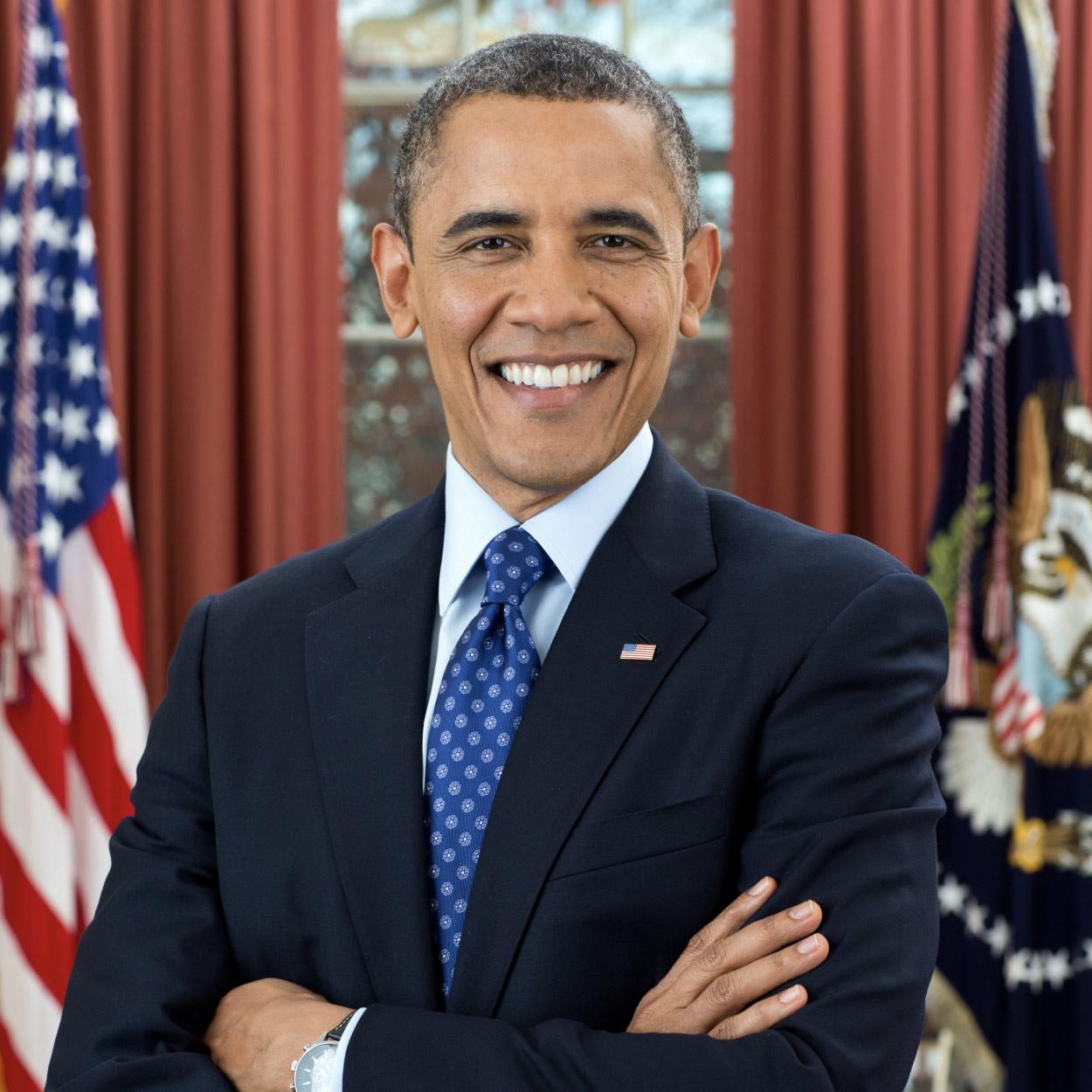


He was born into a world where racial divisions still shaped American life. Decades later, he stood before millions as the first Black president of the United States, delivering a message of hope that would become part of American history. But behind Barack Obama’s historic rise lies a much longer story of family, identity, ambition, difficult decisions, political battles, and a legacy that continues to inspire debate.
From an Unlikely Beginning to a Historic Presidency
On November 4, 2008, millions of Americans watched as history unfolded.
In Chicago’s Grant Park, an enormous crowd gathered beneath the night sky, waving American flags and waiting for a man whose presidential campaign had captured the attention of the world.
When Barack Obama appeared onstage, the significance of the moment was impossible to ignore.
A country with a painful history of slavery, segregation, and racial discrimination had elected its first Black president.
For many Americans, the victory represented a powerful symbol of progress. For others, it marked the beginning of a new political era filled with enormous expectations and difficult questions.
Obama was just 47 years old when he won the election.
His journey to the White House had taken him from Hawaii to Indonesia, from college classrooms to Chicago neighborhoods, and from the Illinois State Senate to the highest office in the United States.
But his life had never followed a predictable path.
A Childhood Between Two Worlds
Barack Hussein Obama II was born on August 4, 1961, in Honolulu, Hawaii.
His father, Barack Obama Sr., was a student from Kenya who had traveled to the United States to pursue higher education. His mother, Stanley Ann Dunham, was a young American woman from Kansas.
Their relationship crossed racial and cultural boundaries at a time when interracial marriage remained controversial in many parts of the country.
Obama’s parents separated when he was young and eventually divorced.
His father returned to Kenya, leaving Obama to grow up with only limited contact with him. That absence would become an important theme in Obama’s later reflections on identity, family, and belonging.
His mother subsequently married an Indonesian man named Lolo Soetoro, and the family moved to Jakarta when Obama was a child.
Living in Indonesia exposed him to a very different environment from the United States. He encountered different languages, traditions, religious practices, and economic conditions.
Those experiences helped shape his understanding of the world.
Eventually, Obama returned to Hawaii, where he lived with his maternal grandparents and attended Punahou School.
Although he received a strong education, he also faced questions about his racial identity and his place in American society.
Growing up as a biracial child, often surrounded by classmates from different backgrounds, Obama had to develop his own understanding of who he was.
Years later, those experiences would become central to his memoir, Dreams from My Father.
Education, Ambition, and Finding His Purpose
After graduating from high school, Obama attended Occidental College in Los Angeles before transferring to Columbia University in New York City.
He graduated from Columbia in 1983 with a degree in political science.
At that point, the future president was still searching for a meaningful direction.
Rather than immediately pursuing a high-paying career, Obama eventually moved to Chicago, where he worked as a community organizer.
His work involved helping residents address problems affecting their neighborhoods, including unemployment, housing difficulties, and limited access to economic opportunities.
Chicago became one of the most important cities in his life.
It was where he developed his political identity, built lasting relationships, and began to understand how public policy affected ordinary families.
Obama later attended Harvard Law School.
In 1990, he became the first Black president of the prestigious Harvard Law Review, attracting national attention.
He graduated from Harvard Law School in 1991.
With his academic credentials, Obama had opportunities to pursue lucrative legal work. Instead, he returned to Chicago, where he practiced civil rights law, taught constitutional law, and continued participating in community and political activities.
His ambitions were gradually moving toward public service.
Meeting Michelle Obama: A Partnership That Changed His Life
One of the most important developments in Obama’s personal life happened in Chicago.
In 1989, while working at a law firm, he met a young attorney named Michelle Obama.
Michelle Robinson was a graduate of Princeton University and Harvard Law School. She was assigned to mentor Obama during his summer position at the firm.
Their professional relationship gradually developed into a romance.
They married on October 3, 1992.
Over the following years, Michelle became one of Barack Obama’s closest advisers and most important sources of personal support.
The couple welcomed two daughters, Malia in 1998 and Sasha in 2001.
As Obama’s political career expanded, their family faced growing public attention.
Michelle would eventually become a prominent advocate for children’s health, education, military families, and opportunities for girls.
Their marriage also became a highly visible part of Obama’s public image.
Throughout his presidency, Obama frequently spoke about the importance of his wife and daughters, acknowledging the sacrifices his family made because of his political career.
The First Steps Into Politics
Obama entered elected politics in 1996, winning a seat in the Illinois State Senate.
He began serving in 1997 and worked on legislation involving ethics, health care, criminal justice, and support for working families.
His political career was not without setbacks.
In 2000, he ran for a seat in the U.S. House of Representatives but lost the Democratic primary to incumbent Congressman Bobby Rush.
The defeat forced Obama to reconsider his political strategy.
Rather than abandoning politics, he continued building relationships, developing his legislative experience, and expanding his public profile.
In 2004, Obama ran for the United States Senate.
That same year, he delivered the keynote address at the Democratic National Convention in Boston.
The speech transformed his national reputation.
Speaking about unity, shared values, and the possibility of overcoming political divisions, Obama presented himself as a new kind of national political figure.
His message resonated with many viewers.
Later that year, he won the U.S. Senate election in Illinois by a landslide.
Suddenly, a politician who had been relatively unknown outside his home state was being discussed as a potential future presidential candidate.
The 2008 Election That Changed American History
His campaign emphasized hope, change, political participation, and a desire to move beyond traditional partisan divisions.
At first, many observers questioned whether a relatively inexperienced senator could defeat more established political figures.
Among his strongest opponents in the Democratic primary was Hillary Clinton, a former First Lady and U.S. senator with extensive national recognition.
The primary contest became long, competitive, and historic.
Obama’s campaign distinguished itself through grassroots organizing, small-dollar fundraising, enthusiastic volunteers, and innovative use of online communication.
Young voters played an especially important role in his movement.
His slogan, “Yes We Can,” became internationally recognizable.
After securing the Democratic nomination, Obama faced Republican nominee John McCain in the general election.
The election took place during a period of severe economic uncertainty.
The United States was experiencing a major financial crisis, unemployment was rising, and public confidence in political leadership had been shaken.
On November 4, 2008, Obama defeated McCain, winning 365 electoral votes to McCain’s 173.
The result was a defining moment in American political history.
For generations of Americans who had experienced racial exclusion and discrimination, Obama’s victory carried profound emotional significance.
Yet the celebration was also accompanied by an enormous challenge.
He was about to inherit a country struggling through one of its worst economic crises in decades.
Entering the White House During a National Crisis
On January 20, 2009, Barack Obama was inaugurated as the 44th president of the United States.
Millions watched the ceremony in Washington, D.C., and around the world.
His inauguration symbolized a major milestone in American history, but the new administration immediately faced serious problems.
Banks and financial institutions had been destabilized by the global financial crisis.
Millions of Americans had lost jobs, and many families were struggling to keep their homes.
The automobile industry faced major difficulties, while businesses across the country reduced spending and employment.
Obama’s administration supported an economic stimulus package intended to protect jobs, encourage investment, and help stabilize the economy.
The American Recovery and Reinvestment Act of 2009 provided approximately $787 billion in estimated stimulus funding at the time of enactment, with later official cost estimates exceeding that initial figure.
The administration also continued and restructured federal support for the struggling automobile industry.
Supporters argued that these actions helped prevent a deeper economic collapse.
Critics questioned the cost, effectiveness, and extent of government intervention.
The economic recovery that followed was gradual and uneven, and debates over Obama’s economic policies continued throughout his presidency.
The Affordable Care Act: One of His Biggest Achievements
One of Obama’s most consequential domestic policy achievements came in March 2010, when he signed the Affordable Care Act into law.
Often called Obamacare, the legislation represented one of the largest changes to the American health insurance system in decades.
Its major provisions included expanding Medicaid eligibility in participating states, creating health insurance marketplaces, providing financial assistance for eligible consumers, and protecting people with preexisting medical conditions from certain insurance discrimination.
The law also allowed many young adults to remain on their parents’ health insurance plans until age 26.
For millions of Americans, these changes expanded access to health coverage.
However, the law also generated intense political controversy.
Republican lawmakers and other critics argued that it increased federal involvement in health care and imposed costly requirements on individuals, employers, and insurers.
The Affordable Care Act faced repeated legal and political challenges.
Despite those battles, its central framework remained in place after Obama left office.
The legislation became one of the defining elements of his domestic legacy.
The Mission Against Osama bin Laden
On May 1, 2011, Obama announced that American forces had killed Osama bin Laden during a military operation in Abbottabad, Pakistan.
Bin Laden had led al-Qaeda, the terrorist organization responsible for the September 11, 2001, attacks against the United States.
The operation followed years of intelligence work.
Obama authorized the raid after reviewing information about a compound where intelligence officials believed bin Laden was hiding.
U.S. Navy SEALs carried out the mission.
The announcement prompted public gatherings and celebrations in parts of the United States.
For many Americans, the operation represented an important moment of accountability nearly ten years after the September 11 attacks.
The mission also became one of the most widely discussed national security decisions of Obama’s presidency.
At the same time, his broader counterterrorism policies, including drone strikes and surveillance practices, attracted criticism from civil liberties organizations and human rights advocates.
These controversies illustrated the difficult balance between national security and individual rights that characterized much of his presidency.
Winning a Second Term
In 2012, Obama sought reelection against Republican candidate Mitt Romney.
The campaign focused heavily on economic recovery, taxes, health care, government spending, and competing visions for America’s future.
Obama won reelection with 332 electoral votes to Romney’s 206.
His second term included major developments involving immigration policy, climate change, foreign relations, and civil rights.
Among the most significant diplomatic achievements was the 2015 Paris Agreement on climate change, which the Obama administration helped negotiate.
His administration also participated in the 2015 international nuclear agreement with Iran, intended to limit Iran’s nuclear activities in exchange for sanctions relief.
Both agreements attracted supporters and critics.
In 2015, Obama announced steps toward restoring diplomatic relations with Cuba after decades of hostility between the two countries.
His administration also took executive action on immigration, including the Deferred Action for Childhood Arrivals program, known as DACA, established in 2012.
The program offered certain undocumented immigrants who had arrived in the United States as children temporary protection from deportation and eligibility to seek work authorization.
These policies reflected Obama’s broader priorities but also contributed to legal challenges and political disagreement.
Barack Obama and the Fight for Civil Rights
Race and equality remained important themes throughout Obama’s presidency.
His election had been celebrated as evidence of racial progress, but racial tensions and inequality did not disappear.
High-profile incidents involving police violence, racial profiling, and discrimination sparked protests and national conversations.
Obama sometimes addressed these events publicly, discussing the experiences of Black Americans and the need for greater understanding.
His comments drew praise from supporters who believed the president was confronting difficult issues.
They also attracted criticism from opponents who disagreed with his approach.
In 2015, Obama delivered a widely discussed speech in Selma, Alabama, commemorating the 50th anniversary of the historic civil rights march from Selma to Montgomery.
The speech connected the struggles of earlier generations with continuing debates over voting rights, equality, and American democracy.
Another major development came in June 2015, when the Supreme Court ruled in Obergefell v. Hodges that same-sex couples had a constitutional right to marry.
Obama welcomed the ruling, having publicly expressed support for same-sex marriage in 2012.
Although the decision was made by the Supreme Court rather than the president, it became an important part of the broader social changes associated with his years in office.
White House Historical Association+1
The Controversies and Criticism of His Presidency
No presidency is defined entirely by its accomplishments.
Obama’s eight years in office included significant controversies and policy failures.
His administration faced criticism over the use of military drones, civilian casualties in overseas counterterrorism operations, and the continued operation of the detention facility at Guantánamo Bay.
Despite promising to close Guantánamo, Obama left office with the facility still operating.
The administration also faced difficult decisions involving the Syrian civil war, the rise of ISIS, and instability in Libya following the 2011 international military intervention.
At home, critics questioned his immigration enforcement policies, executive actions, and approach to federal spending.
Political polarization remained intense, even though Obama had campaigned on bringing Americans together.
Supporters argued that he had governed during extraordinary economic and political difficulties while achieving major reforms.
Opponents maintained that some of his policies expanded federal authority too far or failed to produce the results he had promised.
These disagreements remain central to assessments of his presidency.
Miller Center+2
Saying Goodbye to the White House
On January 10, 2017, Barack Obama delivered his farewell address in Chicago.
He returned to the city where he had built his political career and where his journey toward national leadership had begun.
The speech reflected on democracy, citizenship, economic change, and the responsibilities Americans share in shaping their country.
Obama also paid tribute to Michelle, their daughters, and the people who had supported his political career.
For many supporters, the address was an emotional ending to an extraordinary chapter of American history.
On January 20, 2017, Obama completed his second term and left the White House as Donald Trump became president.
After eight years in office, Obama returned to private life.
His time as president was over, but his influence on American politics was far from finished.
Life After the Presidency
He and Michelle expanded their work through the Obama Foundation, which focuses on leadership development, civic participation, and community engagement.
Obama also returned to writing.
In November 2020, he published A Promised Land, the first volume of his presidential memoirs.
The book explored his political rise, early presidency, family life, and major decisions during his administration.
It offered readers a detailed account of how Obama understood the challenges of presidential leadership.
Meanwhile, Michelle Obama’s memoir, Becoming, became an international bestseller and introduced millions of readers to her experiences before and during her time as First Lady.
Together, the Obamas remained prominent figures in American cultural and public life.
The Obama Presidential Center and His Lasting Legacy
One of Obama’s most significant post-presidential projects is the Obama Presidential Center in Chicago’s Jackson Park.
The center was developed as a place for exhibitions, education, community activities, and leadership programs.
Its public opening in June 2026 marked another milestone in efforts to preserve and interpret the Obama presidency.
Unlike traditional presidential libraries, the center does not physically house the official presidential records, which are administered by the National Archives through the Barack Obama Presidential Library.
The project also generated debate over development, neighborhood investment, and its effects on surrounding communities.
For supporters, it represents a lasting investment in civic leadership and Chicago’s South Side.
Barack Obama Presidential Library+1
Why Barack Obama’s Story Still Matters
Barack Obama’s place in history is secure in one fundamental respect: he was the first Black president of the United States.
That achievement alone transformed the image of American presidential leadership.
But his significance extends beyond that historic first.
He entered office during a major financial crisis, signed landmark health care legislation, oversaw important foreign policy decisions, and helped shape debates about race, citizenship, government, and national identity.
His presidency also demonstrated the limits of political leadership.
Campaign promises confronted legislative opposition, international conflicts, economic constraints, and disagreements over the direction of the country.
Some of his policies survived his administration. Others were modified, challenged, or reversed.
Historians will continue debating his effectiveness, his missed opportunities, and the long-term consequences of his decisions.
Yet the personal journey remains remarkable.
A boy born in Hawaii, raised partly in Indonesia, and shaped by the experiences of a multicultural family eventually became the leader of one of the world’s most powerful nations.
He reached that position through education, community work, legal training, political organizing, and years of public service.
His story is not simply about becoming president.
It is also about identity, ambition, perseverance, responsibility, and the difficult task of turning political ideals into government policy.
Conclusion: A Name That Will Remain in American History
Barack Obama turned 65 on August 4, 2026.
More than seventeen years after his historic inauguration, his presidency remains a major subject of discussion in the United States and around the world.
To admirers, he represents hope, progress, and the possibility of breaking barriers once thought impossible.
To critics, his presidency raises important questions about political promises, government power, and the effectiveness of his policies.
Both perspectives form part of the historical record.
But whatever conclusions future generations reach about his presidency, one fact will remain unchanged.
On November 4, 2008, Barack Obama achieved something no Black American had achieved before him.
He was elected president of the United States.
And in doing so, he opened a new chapter in American history.