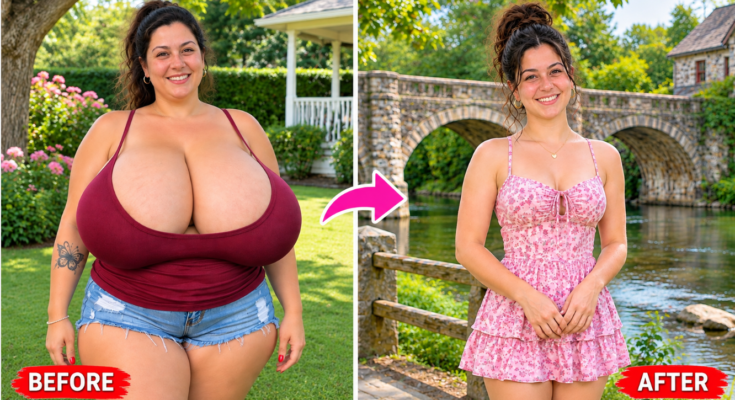
At just 22 years old, Emily Anderson was carrying an extraordinary physical burden that most people could never imagine. A rare medical condition had caused her breasts to grow to an extreme size, leaving her struggling to walk comfortably, sleep through the night, and enjoy the college life she had always dreamed of. But after years of pain, embarrassment, and unanswered questions, one life-changing operation offered her something she feared she might never experience again: the freedom to live without constant suffering.
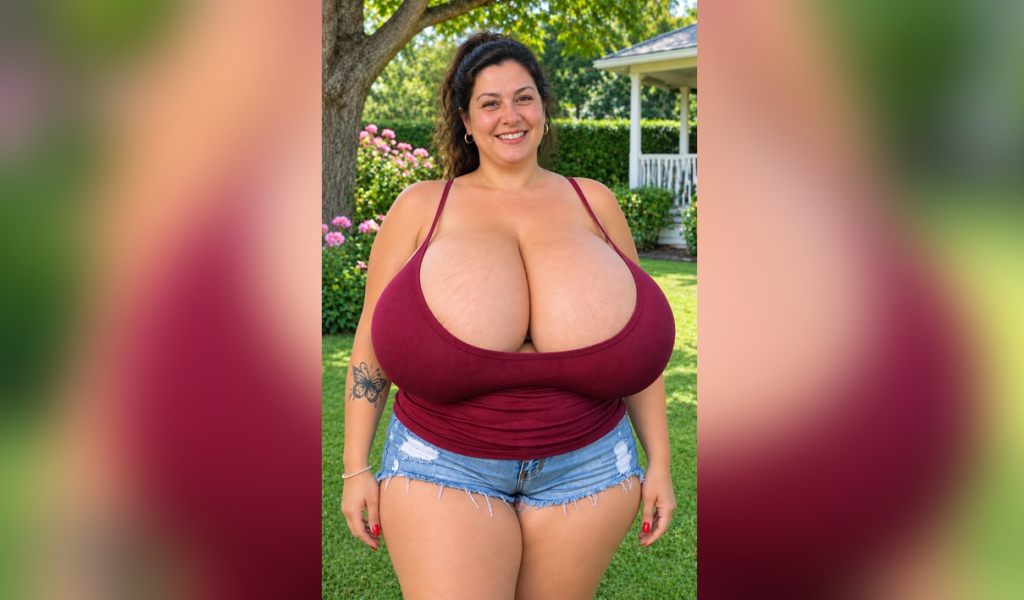
Editor’s note: This is a fictionalized human-interest story inspired by the real medical condition gigantomastia. Emily Anderson is a fictional character, and the personal events, dialogue, and surgical details below are invented for storytelling purposes.
The Young Woman Who Hid Her Pain Behind a Smile
At first glance, Emily Anderson seemed like any other college student in Columbus, Ohio.
She was intelligent, friendly, and determined to build a better future for herself. She loved spending time with her friends, visiting coffee shops, and dreaming about the day she would graduate from university.
But behind her warm smile was a struggle that few people truly understood.
Every morning, Emily woke up with pain.
Her shoulders ached. Her back felt exhausted before the day had even begun. Simply getting dressed could become a frustrating experience.
The reason was a rare medical condition that had caused her breasts to grow far beyond their expected size.
By the time she reached her early twenties, the physical weight had become overwhelming.
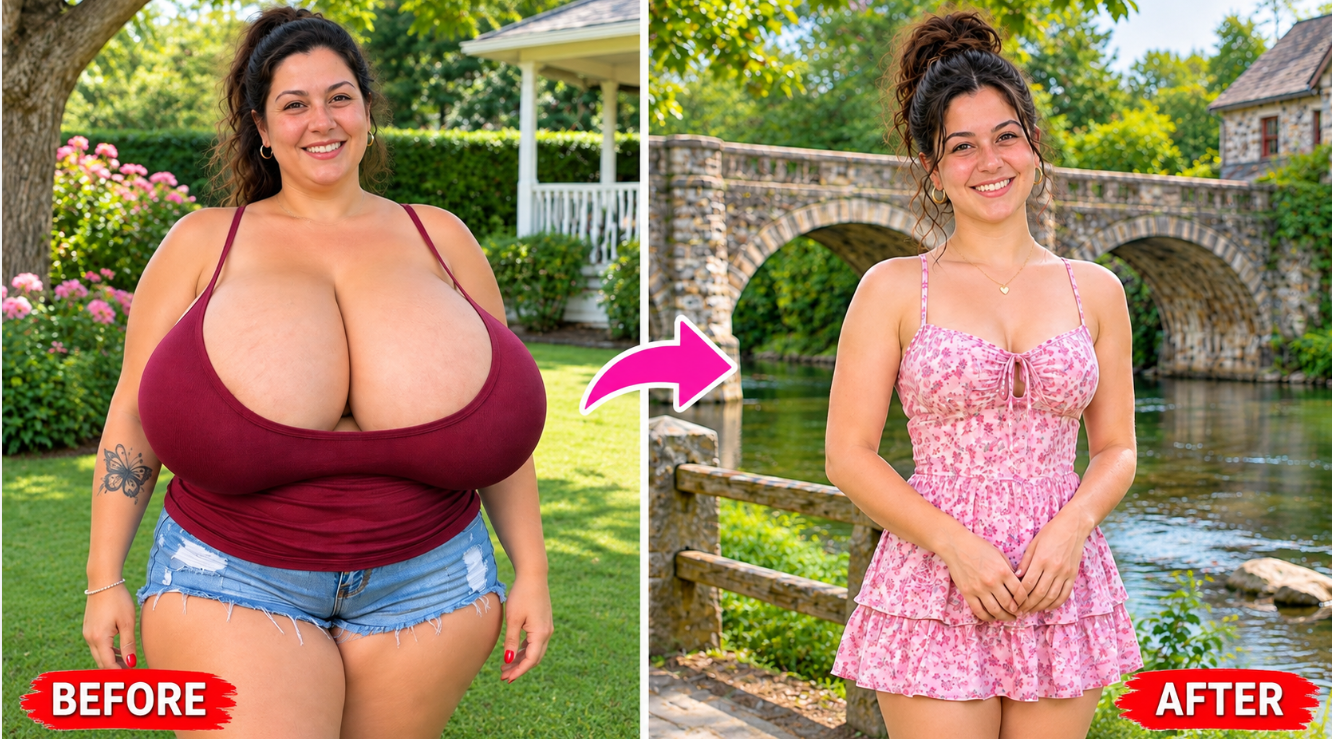
In this fictional account, Emily’s breasts eventually weighed approximately 12 kilograms combined, equivalent to about 26 pounds.
Imagine carrying that weight against your chest every moment of the day.
While sitting in class.
While walking to the grocery store.
While trying to sleep.
Even while doing something as simple as bending down to tie your shoes.
For Emily, there was no way to put the weight down and take a break.
It was always there.
And the physical pain was only one part of her struggle.

It Started With Changes She Couldn’t Explain
Emily first noticed unusual changes in her body when she was seventeen.
Like many teenagers, she initially believed that her body was simply developing.
But something felt different.
Her breasts continued growing at a pace that made her increasingly uncomfortable.
Within months, clothing that had previously fit her no longer worked.
She needed larger bras, looser shirts, and specially selected outfits to accommodate the changes.
At first, Emily tried to laugh about the situation.
She told herself that everything would eventually settle down.
But the growth continued.
By her eighteenth birthday, she had begun experiencing frequent shoulder and back pain.
Her mother noticed that Emily often rubbed her neck after school.
“Are you feeling okay, sweetheart?” her mother asked one evening.
Emily hesitated.
“My back just hurts a little. I think it’s because I’ve been carrying too many books.”
But deep down, she knew the problem was becoming more serious.
Soon, the pain was affecting almost everything she did.
When a Normal College Day Becomes Exhausting
College was supposed to be one of the most exciting periods of Emily’s life.
She had worked hard to earn her place at university.
She imagined joining student organizations, attending events, and making memories with friends.
Instead, much of her energy went toward managing discomfort.
Walking from one classroom to another became increasingly difficult.
Standing in long lines left her exhausted.
Even sitting through a two-hour lecture could cause intense strain in her upper back.
Sometimes, Emily would arrive home and immediately lie down, hoping the pain would ease.
Her friends occasionally invited her to go hiking, dancing, or shopping.
She often declined.
Not because she didn’t want to participate, but because she worried that her body couldn’t handle the activity.
“I’ll come next time,” she would say.
But next time rarely came.
As the months passed, Emily began feeling as though the world was moving forward without her.
Her friends were making memories.
She was trying to make it through another day.
The Emotional Pain Nobody Could See
One of the hardest parts of Emily’s experience was dealing with unwanted attention.
People sometimes stared at her in public.
Others made comments about her appearance without understanding that she was living with a serious medical condition.
Some assumed her body looked the way it did by choice.
Few realized how much physical discomfort she experienced.
Emily gradually became more self-conscious.
She avoided crowded places and preferred oversized clothing that drew less attention.
She stopped taking photographs with friends.
At social gatherings, she sometimes found herself standing in a corner, hoping nobody would notice her.
One evening, after returning from campus, Emily stood in front of her bedroom mirror.
She looked at the person staring back.
She was still the same young woman with dreams, ambitions, and a bright future.
But she barely recognized the confidence she once had.
Tears filled her eyes.
“I don’t want to feel like this forever,” she whispered.
That night, she made a promise to herself.
She would find out what was happening to her body.
And she would not stop searching for help.
The Diagnosis That Finally Explained Everything
After seeking medical attention, Emily was referred to specialists who evaluated her symptoms.
Following medical examinations and a review of her history, she learned that her condition was consistent with gigantomastia.
It was a word she had never heard before.
Gigantomastia is a rare condition characterized by excessive breast tissue growth.
Unlike ordinary breast development, the growth can become severe enough to cause significant physical limitations.
In some cases, the breasts may become extremely heavy, placing substantial pressure on the neck, shoulders, and spine.
Patients may experience chronic pain, skin irritation, difficulty exercising, and problems with mobility.
The exact cause is not always understood.
Some cases are associated with hormonal changes, pregnancy, puberty, certain medications, or other medical factors.
For Emily, finally having a name for her condition was an emotional moment.
For years, she had wondered why her body was changing so dramatically.
Now she understood that she was dealing with an uncommon medical problem.
She wasn’t simply imagining the pain.
There was a medical explanation.
But receiving a diagnosis did not mean the difficult journey was over.
In many ways, it was only beginning.
A Difficult Decision About Surgery
Emily’s doctors discussed several possible approaches to managing her symptoms.
Because of the severity of her fictional case, breast reduction surgery became an important treatment option.
The procedure would involve removing excess breast tissue to reduce the weight and strain on her body.
For Emily, the possibility sounded almost unbelievable.
Could she really wake up one day without carrying so much weight?
Could she walk comfortably again?
Could she return to the activities she loved?
But surgery also frightened her.
She knew that a major operation involved risks.
There could be bleeding, infection, scarring, changes in sensation, healing problems, or complications requiring additional treatment.
She also worried about how long recovery would take.
For weeks, Emily thought about the decision.
She researched the condition, attended consultations, and discussed her concerns with her family.
Her mother reminded her that she didn’t have to face the situation alone.
“We’ll get through this together,” she said.
Those words gave Emily the reassurance she needed.
Eventually, she decided to move forward with surgery.
For the first time in years, she began imagining a future that wasn’t dominated by pain.
The Night Before Everything Changed
The evening before her operation, Emily could barely sleep.
Her hospital bag was packed.
Her medical paperwork was ready.
Her family had arranged transportation and time away from work to support her during recovery.
But as she lay in bed, countless thoughts raced through her mind.
What if something went wrong?
What if the surgery didn’t help?
What if recovery was harder than she expected?
She turned toward the window and watched the streetlights glowing outside.
For a moment, she remembered the energetic teenager she had once been.
The girl who loved dancing in her bedroom.
The girl who enjoyed long walks with friends.
The girl who never worried about whether climbing a flight of stairs would leave her exhausted.
She wanted to feel like that girl again.
Before closing her eyes, Emily whispered a quiet prayer.
“Please let tomorrow be the beginning of something better.”
The Ten-Hour Operation That Offered New Hope
In this fictional account, Emily arrived at a specialist hospital early the following morning.
Her mother held her hand while the medical team prepared her for surgery.
Although she was nervous, Emily felt reassured by the explanations she had received from her surgeons.
The planned operation was extensive because of the amount of tissue that needed to be removed.
The procedure lasted approximately ten hours.
During the surgery, the team removed nearly 10 kilograms, or about 22 pounds, of excess breast tissue.
It was an extraordinary amount.
The operation required careful attention to tissue removal, blood supply, wound closure, and the patient’s overall stability.
When Emily finally woke up, she felt groggy and sore.
Her chest was bandaged.
She was tired and needed time to recover from anesthesia.
But she also knew that she had taken an enormous step toward improving her quality of life.
Her mother sat beside her hospital bed.
When Emily opened her eyes, her mother smiled.
“You did it, sweetheart.”
Emily managed a small smile.
She knew the hardest part of recovery might still be ahead.
But for the first time in years, she felt hopeful.
Recovery Wasn’t Easy, but Every Small Improvement Mattered
The days following surgery were challenging.
Emily experienced soreness, swelling, and fatigue.
She needed help with some ordinary activities and had to follow careful instructions to protect the surgical wounds.
Her doctors monitored her healing and explained that recovery would take time.
There would be follow-up appointments.
There would be restrictions on strenuous activity.
And there would be moments when she felt frustrated by how slowly her body seemed to recover.
But gradually, Emily began noticing changes.
The constant pulling sensation across her shoulders was reduced.
Standing upright felt less exhausting.
Walking short distances became more comfortable.
One afternoon, she carefully walked from her bedroom to the kitchen without the familiar feeling of overwhelming weight against her chest.
She stopped for a moment.
It was such a small thing.
Something most people would never think twice about.
But Emily began crying.
Not because she was in pain.
Because she realized how much she had missed feeling comfortable in her own body.
The First Walk That Made Her Cry
Several weeks later, after receiving permission to increase her activity, Emily decided to visit a nearby park with her mother.
The weather was beautiful.
Sunlight filtered through the trees, and a gentle breeze moved across the walking paths.
Before surgery, Emily had often avoided long walks.
Her back would begin aching, and the weight on her chest made movement uncomfortable.
But that afternoon felt different.
She walked slowly at first.
Then a little farther.
And farther still.
She listened to birds singing and watched families enjoying the afternoon.
For the first time in years, she wasn’t constantly thinking about how much pain she was in.
She was simply enjoying the moment.
Halfway along the path, Emily stopped.
Her mother looked concerned.
“Are you hurting?”
Emily shook her head.
“No,” she answered, her voice trembling.
“That’s why I’m crying.”
Her mother wrapped an arm around her shoulders.
For Emily, that walk represented something far greater than exercise.
It represented freedom.
Returning to College With Renewed Confidence
As her recovery progressed, Emily began preparing to return to university.
She was excited, but also nervous.
She knew that people might notice the change in her appearance.
Some might ask questions.
Others might make assumptions.
But this time, Emily felt differently about herself.
She no longer believed that she needed to explain her body to everyone around her.
Her health was personal.
Her medical decisions belonged to her.
And her worth had never depended on how she looked.
When she returned to campus, her closest friends welcomed her warmly.
They were happy to see her smiling again.
Emily gradually resumed activities she had previously avoided.
She attended student events.
She spent more time outdoors.
She began taking photographs with friends again.
Most importantly, she could focus more fully on her studies and her future.
The operation had not magically solved every problem in her life.
But it had given her a chance to participate in life more comfortably.
And that meant everything.
What Is Gigantomastia, and Why Does It Happen?
Although Emily’s story is fictional, gigantomastia is a real and medically recognized condition.
It involves unusually excessive growth of breast tissue, sometimes occurring over a relatively short period.
The condition is rare, and its underlying mechanisms are not completely understood.
Some cases occur during puberty, while others develop during pregnancy or are associated with certain medications or medical conditions.
Symptoms can vary considerably.
Some patients experience rapid enlargement, while others develop more gradual changes.
Severe cases may involve chronic back and shoulder pain, skin inflammation, difficulty moving comfortably, and emotional distress.
Treatment is individualized.
Doctors may investigate possible contributing factors, address associated symptoms, and consider surgical treatment when appropriate.
Breast reduction surgery can provide significant relief for some patients, although outcomes depend on the severity of the condition, surgical approach, healing, and individual circumstances.
The condition can also recur in some cases, meaning continued medical follow-up may be necessary.
Why Stories Like Emily’s Matter
Rare medical conditions can be difficult for the public to understand.
When someone’s body looks different from what society considers typical, people may focus on appearance rather than health.
But visible physical differences can sometimes reflect serious underlying medical challenges.
Emily’s fictional journey illustrates why empathy matters.
A person who appears different may be experiencing pain that others cannot see.
Someone who avoids social activities may be dealing with physical limitations rather than a lack of interest.
And someone seeking surgery may be making a difficult medical decision, not simply pursuing a cosmetic change.
Understanding these differences can help create a more compassionate environment for people living with unusual health conditions.
A New Chapter Filled With Possibilities
Months after the operation, Emily began looking toward her future with renewed excitement.
She continued working toward her college degree.
She made plans to travel after graduation.
She considered joining a fitness program once she had fully recovered and received medical clearance.
The dreams she had placed on hold slowly began returning.
But perhaps the most important change was the way she viewed herself.
For years, Emily had measured her days by how much pain she could tolerate.
Now she was learning to measure them by the experiences she could enjoy.
A walk through the park.
An afternoon with friends.
A comfortable night’s sleep.
A morning when getting dressed no longer felt overwhelming.
These ordinary moments had become extraordinary gifts.
The Powerful Lesson Behind Emily’s Transformation
Emily Anderson’s fictional journey is about more than a rare medical condition or a dramatic surgical procedure.
It is about what happens when someone refuses to surrender hope, even when everyday life becomes incredibly difficult.
It is about the importance of medical care, family support, and understanding.
And it is about recognizing that the most meaningful transformations are not always visible in photographs.
For Emily, the greatest change was not simply the amount of tissue removed during surgery.
It was the possibility of living without the same constant physical burden.
It was being able to walk through her college campus with greater comfort.
It was being able to look toward her future with excitement instead of fear.
And it was discovering that she deserved compassion and respect throughout her journey, not only after her body changed.
At 22 years old, Emily Anderson had already faced challenges that most people could scarcely imagine. But her story offers a powerful reminder: sometimes the most life-changing gift isn’t a new appearance. It’s the opportunity to enjoy the simple freedoms that make life beautiful.