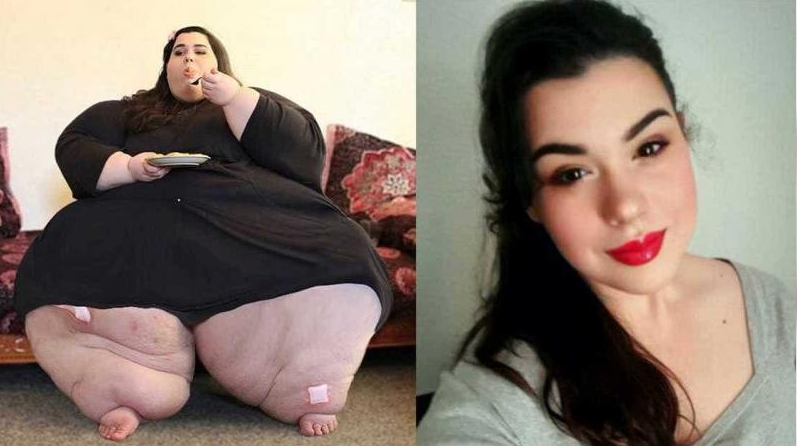
At an age when many young adults are exploring the world, building careers, and enjoying their independence, Amber Rachdi was fighting a battle that had taken control of almost every part of her life.

She was only 23 years old, yet she weighed approximately 298 kilograms (657 pounds). Walking was exhausting. Ordinary activities had become overwhelming challenges. Even leaving home required planning, physical effort, and sometimes assistance from others.
But what made Amber’s story extraordinary wasn’t simply how much she weighed.
It was what happened when she decided that her future could be different.
The young woman who once struggled to move comfortably would go on to achieve a dramatic weight loss, inspiring thousands of people who followed her journey.
Her transformation became one of the memorable stories associated with TLC’s My 600-lb Life.
And behind the before-and-after photographs was something far more powerful than a change in appearance: a young woman reclaiming her independence, confronting her fears, and discovering new possibilities for her future.
A Life That Had Become Increasingly Difficult
Imagine being just 23 years old and finding that everyday activities require enormous physical effort.
Getting out of bed, walking across a room, shopping for necessities, or visiting friends can become complicated when mobility is severely restricted.
For Amber Rachdi, these were not hypothetical challenges.
Growing up in Oregon, United States, Amber had struggled with her weight since childhood. As the years passed, her weight increased until it began affecting nearly every aspect of her daily life.
By the time she appeared on My 600-lb Life in 2015, she weighed approximately 657 pounds.
At that weight, even relatively short periods of physical activity could be exhausting.
Her mobility had become so limited that she sometimes needed assistance or mobility equipment to get around.
But the physical difficulties were only one part of the story.
Living with severe obesity can affect relationships, emotional well-being, confidence, and participation in everyday activities.
For a young adult, those limitations can feel especially significant.
Amber was at an age when many people were establishing their independence. Instead, she faced a serious medical condition that made independence increasingly difficult.
Her circumstances were challenging, but her story was far from over.
The Struggle People Couldn’t See
When audiences first encountered Amber on television, they could immediately see the physical effects of her weight.
What was less visible was the complicated relationship between emotional health, eating behaviors, and the challenges of living with severe obesity.
Amber spoke publicly about difficulties involving food and anxiety.
For many people, eating can become connected to stress, comfort, routine, and emotional regulation. Changing those patterns often requires more than determination alone.
Severe obesity is a complex chronic medical condition influenced by biological, psychological, environmental, and social factors.
That complexity matters because weight loss is not simply a question of deciding to eat less.
People living with severe obesity may face physical limitations that make exercise difficult, medical complications that require treatment, and emotional challenges that can interfere with long-term changes.
Amber’s journey would require her to confront several of these difficulties at once.
It would also require professional medical support.
And eventually, she reached a turning point.
The Decision That Opened the Door to a Different Future
At 23, Amber sought help through TLC’s My 600-lb Life, a reality television series following people receiving treatment for severe obesity.
Her treatment brought her into the care of Dr. Younan Nowzaradan, a bariatric surgeon known for working with patients facing extreme weight-related medical challenges.
For Amber, entering treatment meant confronting difficult realities.
Her health needed attention. Her mobility was limited. And meaningful progress would require changes that extended far beyond a single medical appointment.
Weight-loss treatment at this level can involve nutritional adjustments, medical assessments, psychological support, and, when appropriate, bariatric surgery.
Amber eventually underwent weight-loss surgery as part of her treatment.
The procedure was a major milestone.
But it was not a magical solution that instantly changed her life.
Surgery can help people lose substantial weight by changing the digestive system and influencing hunger and fullness. However, successful long-term outcomes still depend on medical monitoring, nutritional care, and sustainable behavioral changes.
For Amber, the operation marked the beginning of a new phase rather than the end of her struggle.
The months ahead would reveal just how much progress was possible.
The First Year: A Transformation Few Viewers Forgot
One of the most remarkable parts of Amber’s story was the progress she made during her first year of treatment.
When she began, her weight was approximately 657 pounds, or 298 kilograms.
By the end of her documented first-year journey, her weight had fallen to approximately 390 pounds, or 177 kilograms.
That represented a reduction of roughly 267 pounds — approximately 121 kilograms.
For someone who had previously struggled with mobility, losing that amount of weight represented a substantial medical and physical change.
But those numbers tell only part of the story.
Weight loss on this scale can reduce the mechanical strain placed on joints and make certain movements less demanding.
It can also improve several obesity-related health risks, although individual results vary.
The transformation that viewers witnessed was dramatic.
A young woman whose weight had once restricted her daily activities was making progress toward a more independent life.
And the changes continued attracting attention long after her original television appearance.
The Before-and-After Photos That Captured Attention
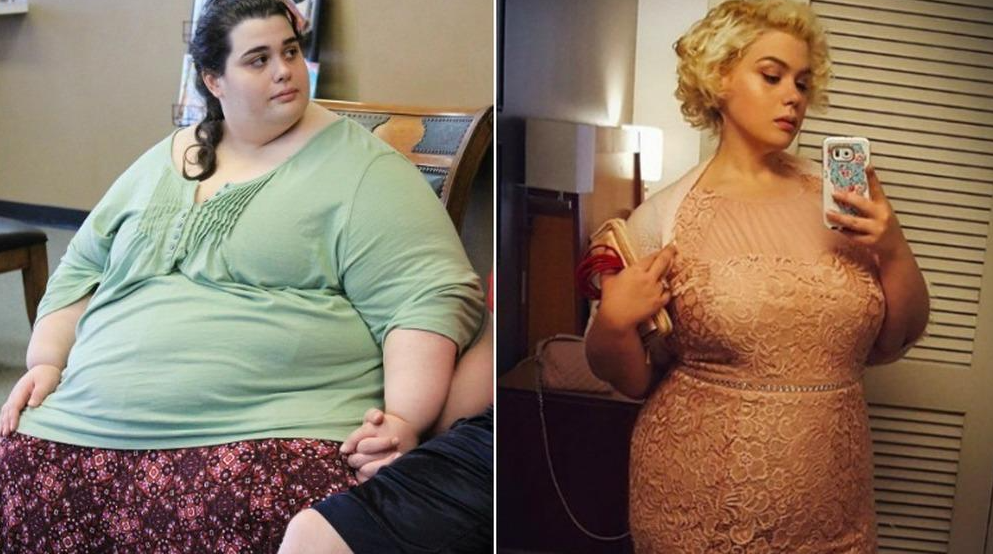
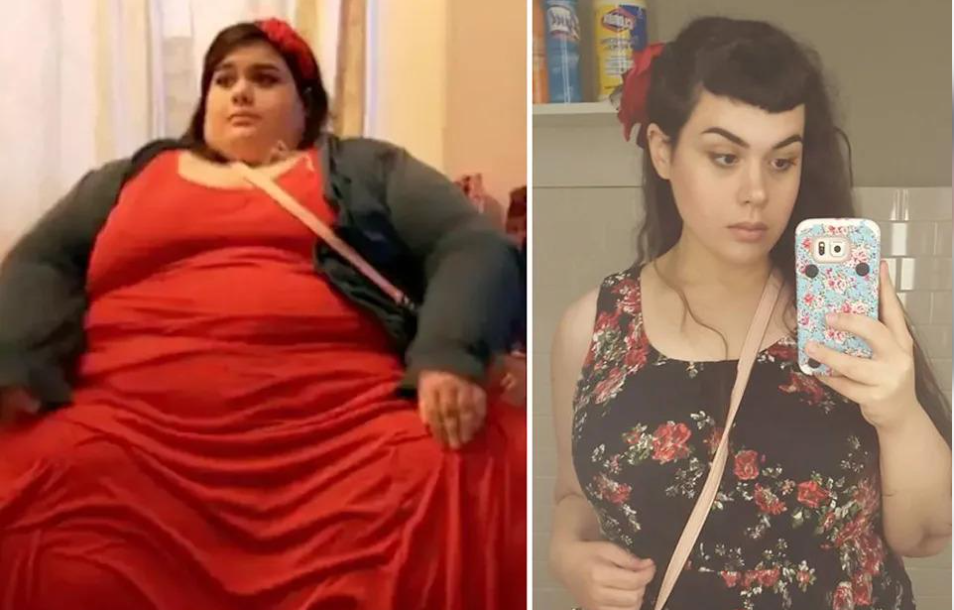
As Amber’s story circulated online, photographs showing her appearance before and after treatment began reaching new audiences.
The contrast was striking.
In earlier images, Amber appeared at the height of her weight-related struggles.
In later photographs, she looked noticeably different, often experimenting with hairstyles, clothing, and makeup.
For people encountering her story for the first time, the images were enough to inspire curiosity.
How had she made such a dramatic change?
How long had the process taken?
And what had happened to the young woman viewers remembered from television?
Various media reports later described Amber as having lost close to 200 kilograms overall.
Some accounts suggested that her weight had fallen to approximately 107 kilograms, or 236 pounds.
Compared with her initial weight of approximately 298 kilograms, that would represent a reduction of around 191 kilograms.
However, publicly reported figures vary, and a loss exceeding 200 kilograms has not been independently established.
Even without exaggerating the numbers, the scale of Amber’s reported transformation remains remarkable.
The photographs tell a story of visible physical change.
But they cannot capture everything that goes into rebuilding a life.
The Emotional Side of Starting Over
A major physical transformation can bring new opportunities, but it can also introduce unexpected emotional challenges.
When someone has lived for years with limited mobility or severe health difficulties, becoming more independent can require adjustments in confidence, relationships, and daily routines.
Weight loss does not automatically resolve anxiety, self-image concerns, or emotional struggles.
Those challenges may require ongoing support even after substantial physical progress.
Amber’s openness about her experiences helped make her story relatable to people who understood that changing one’s health can be a complicated process.
Her journey was not simply about becoming smaller.
It was about navigating changes in how she lived, how she approached her health, and what she could imagine for herself.
For many viewers, that was the most meaningful part of her transformation.
Why Losing Weight Was Only Part of the Victory
A number on a scale can show physical progress, but it cannot fully measure improvements in quality of life.
For someone whose mobility has been severely restricted, the possibility of moving more comfortably can be deeply meaningful.
Consider the everyday activities many people rarely think about: walking through a store, getting into a vehicle, choosing where to go, attending social events, or completing ordinary tasks without extensive assistance.
For people recovering mobility after severe obesity, these activities can represent important milestones.
Improved mobility can also create opportunities for greater social participation and independence.
Amber’s transformation drew attention because of the dramatic change in her weight, but the broader significance of her story was the possibility of living with fewer physical restrictions.
It was a reminder that health-related progress can affect many dimensions of a person’s life.
The Reality Behind an Extraordinary Weight Loss Journey
Before-and-after photographs often compress years of effort into two images.
The first shows where someone started.
The second shows how much has changed.
What disappears between those photographs is the complicated reality of treatment and recovery.
Bariatric surgery requires long-term medical follow-up.
Patients may need ongoing nutritional supplementation, monitoring for deficiencies, and adjustments to eating habits.
Some people experience weight regain, complications, or emotional difficulties after treatment.
Others achieve sustained improvements in their health and quality of life.
There is no single outcome that applies to everyone.
Amber’s story should therefore not be understood as proof that one treatment or lifestyle approach will produce the same results for every person.
Instead, it demonstrates how substantial change can be possible when someone receives appropriate treatment and continues working toward improved health.
The journey can be difficult.
Progress can be uneven.
And the most important victories may not always be visible in photographs.
From a Young Woman in Crisis to an Online Inspiration
When Amber first appeared on television, viewers saw someone facing severe physical limitations at an unusually young age.
Years later, her transformation continued to circulate across social media, entertainment websites, and weight-loss discussion communities.
Her photographs attracted attention from people interested in dramatic physical transformations.
But her story also resonated with audiences who had experienced their own struggles with weight, health, anxiety, or independence.
For some, Amber represented the possibility of meaningful improvement after years of difficulty.
For others, her experience demonstrated the importance of seeking specialized medical care rather than trying to manage a serious condition without support.
Her public journey became a reminder that people should not be defined solely by their most difficult circumstances.
The woman viewers met at 23 was facing a serious health crisis.
That crisis was part of her story.
It was not the entirety of who she was.
A Transformation That Meant More Than Looking Different
In a world where weight-loss stories are often presented primarily as physical makeovers, Amber’s experience offers a broader perspective.
Yes, her appearance changed dramatically.
Yes, the reported weight loss was substantial.
And yes, the contrast between her earlier and later photographs is visually remarkable.
But the most important aspect of her journey was not whether she looked different.
It was the effort to improve her health and regain greater control over her daily life.
Her story also challenges the assumption that people living with severe obesity simply lack motivation.
Obesity is influenced by many factors, and effective treatment often requires professional care, ongoing support, and individualized medical decisions.
Amber’s progress came through treatment and sustained changes, not a quick fix.
That distinction makes her journey more meaningful, not less.
The Powerful Lesson Behind Amber Rachdi’s Story
When Amber appeared on My 600-lb Life, she was a 23-year-old woman weighing almost 300 kilograms.
Her mobility was severely restricted, and everyday life presented enormous challenges.
Her situation was serious.
But it was not the final chapter.
Through specialized treatment, bariatric surgery, and continued changes, she achieved a dramatic reduction in weight.
Her progress became a widely discussed transformation and introduced thousands of people to her story.
Yet perhaps the most important lesson is that someone’s circumstances at one moment do not necessarily determine every possibility for their future.
Health conditions can be complicated, treatment outcomes differ, and no one should feel pressured to measure their worth through appearance or body weight.
But receiving the right support can create opportunities for change.
Amber’s experience is one example of that possibility.
Final Thoughts: The Young Woman Who Changed Her Future
At just 23 years old, Amber Rachdi was living with severe obesity that had dramatically limited her mobility and independence.
She faced challenges that most people her age had never experienced.
Yet her decision to seek treatment marked the beginning of a transformation that would capture public attention.
The weight she lost was extraordinary.
The change in her appearance was unmistakable.
But the deeper story was about health, persistence, and the possibility of a more independent future.
Sometimes the most remarkable transformation isn’t what changes in a photograph. It’s what becomes possible in a person’s life afterward.
Amber Rachdi’s journey remains a powerful example of how a difficult beginning does not have to define the entire story.
And that is what makes her transformation worth remembering.